
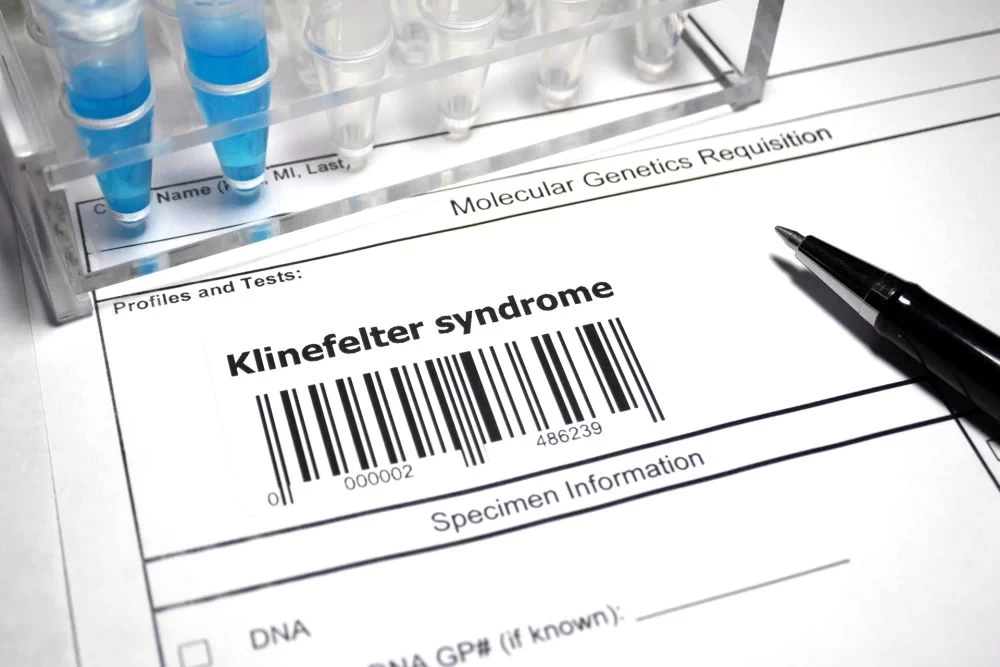
What is the Frequency of Infertility in Klinefelter Syndrome?



Klinefelter syndrome, also known as 47,XXY Syndrome, is recognized as the most prevalent chromosomal disorder associated with male infertility. According to World Health Organization data, approximately one in six couples experiences challenges with fertility or infertility. For couples unable to conceive naturally despite engaging in regular, unprotected sexual intercourse over a period of a year or more, medical evaluation for infertility is recommended. This recommended duration for seeking medical advice can be shorter under certain circumstances, such as advanced age or existing health concerns.
Infertility can stem from various factors, with causes attributed to either partner. In females, issues like early ovarian failure can be significant contributors. In males, one notable genetic factor is Klinefelter syndrome. This condition, characterized by an additional X chromosome resulting in a 47,XXY karyotype, is increasingly identified in men facing difficulties in fathering children. Its prevalence underscores the importance of considering genetic factors in the assessment and management of male infertility.

2.5 per 1,000 men worldwide, which translates to approximately 0.1 to 0.25% of the male population. However, the actual prevalence may be higher due to underdiagnosis. It's estimated that only about 25 to 50 percent of individuals born with Klinefelter syndrome are diagnosed in their lifetime, leaving a significant number unaware of their condition. This syndrome is particularly relevant in the context of male infertility, as studies indicate that about 3-4% of men diagnosed with infertility and roughly 10-12% of men diagnosed with azoospermia (a complete absence of sperm in the semen) have Klinefelter syndrome. These statistics highlight the importance of considering Klinefelter syndrome in the differential diagnosis of male infertility, particularly in cases of azoospermia.

What is the Infertility Risk of Men with Klinefelter Syndrome?
Klinefelter syndrome, typically characterized by an extra X chromosome (47,XXY), often leads to male hypogonadism, which is a deficiency in male hormone production. This condition significantly affects the reproductive capabilities of affected individuals. The testes, which have dual roles in producing sperm and secreting male hormones, are often underdeveloped or functionally impaired in men with Klinefelter syndrome. This often results in azoospermia, where no sperm are present in the ejaculate. However, a small percentage of these men, approximately 8.4% according to some literature, might have a very low sperm count (oligospermia) detectable in semen analysis.
In the context of natural conception, the presence of both egg and sperm is essential. Men with oligospermia may face reduced chances of achieving pregnancy naturally, and those with azoospermia generally cannot father children without medical intervention. Despite this, there have been rare instances, as noted in a few case reports, where men with Klinefelter syndrome and very low sperm output have fathered children naturally.
What are the Diagnostic Methods for Klinefelter Syndrome?
Karyotype Analysis (Chromosome Analysis):
This is a crucial diagnostic test for KS. It involves examining an individual's chromosomes to check for an extra X chromosome, which is characteristic of KS. This test can be performed:
- Prenatally through amniocentesis, where a sample of amniotic fluid is analyzed.
- After birth using a blood sample.
- Non-Invasive Prenatal Testing (NIPT) is a newer method where fetal DNA in the mother's blood is analyzed to detect chromosomal abnormalities like KS. NIPT is becoming a more widely accepted and reliable method.
Hormone Analysis:
Hormone levels provide important diagnostic information. In KS:
- Follicle Stimulating Hormone (FSH) and Luteinizing Hormone (LH) are typically elevated due to impaired sperm production and testosterone synthesis in the testicles.
- Testosterone levels may be lower than normal, a condition known as hypogonadism.
- Elevated estrogen levels can occur due to increased body fat, leading to a hormonal imbalance. This can be addressed with medical treatments.
Semen Analysis:
Also called spermiogram, this test evaluates the quantity and quality of sperm in the ejaculate. Most men with KS have azoospermia, meaning there is no sperm in the ejaculate.
Overall, the diagnosis of Klinefelter syndrome involves a combination of genetic testing, hormonal profiling, and semen analysis. This multifaceted approach ensures a comprehensive evaluation, leading to accurate diagnosis and appropriate management of the condition.
Klinefelter Syndrome Infertility Treatment Options
Men with Klinefelter syndrome may face challenges in fathering children. Fortunately, advancements in health technology now offer these individuals the opportunity to have children. It's important to note that many men with Klinefelter Syndrome may not be aware of their condition. Therefore, those experiencing infertility should consult with a urologist who specializes in this area.
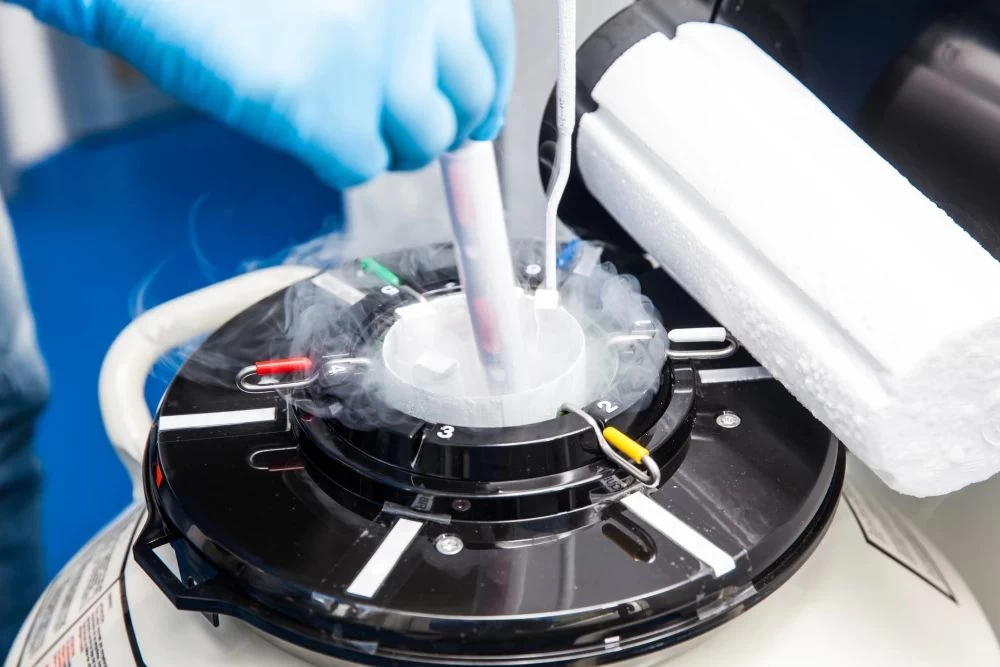
Even in cases of azoospermia, men with Klinefelter syndrome can father children by using sperm extracted from testicular tissue in in vitro fertilization methods. Urologists commonly employ a procedure known as TESE (testicular sperm extraction) for this purpose. The micro-TESE method, developed in 1999 and utilizing an operating microscope, has significantly improved sperm retrieval rates, particularly in men with Klinefelter syndrome. A 2011 article in the 'Fertility and Sterility' magazine reported that sperm was found in 47% (50 out of 106) of men with Klinefelter syndrome using the micro-TESE procedure.
Couples struggling to conceive naturally may be dealing with Klinefelter syndrome. It is advisable for such couples to consult with a gynecologist experienced in infertility issues. Additionally, men should seek an evaluation from a urologist or andrology specialist for the necessary assessments.

References
- https://www.who.int/health-topics/infertility
- https://kidshealth.org/en/parents/klinefelter-syndrome.html
- https://my.clevelandclinic.org/health/diseases/21116-klinefelter-syndrome
- https://pubmed.ncbi.nlm.nih.gov/29438472/
- https://pubmed.ncbi.nlm.nih.gov/21540567/
- https://pubmed.ncbi.nlm.nih.gov/21295296/
- https://www.ncbi.nlm.nih.gov/pmc/articles/PMC10048758/
- https://pubmed.ncbi.nlm.nih.gov/20664188/
- https://www.healthline.com/health/klinefelter-syndrome#symptoms
- https://www.fertstert.org/article/S0015-0282(11)00008-2/fulltext
- https://www.ncbi.nlm.nih.gov/pmc/articles/PMC8815347/#:~:text=(2013)%2C%5B11%5D, sperm%20retrieval%20rates%20were%2028.4%25 .
- https://www.goldjournal.net/article/S0090-4295(06)00747-3/fulltext
